


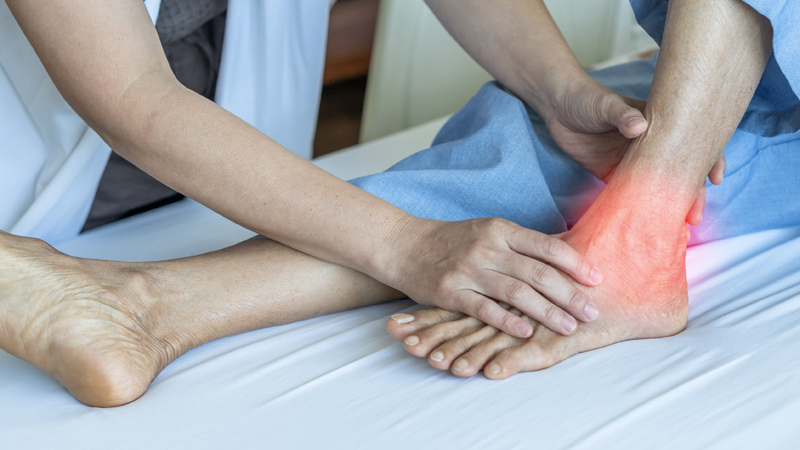
Achilles Tendon Injury
The Achilles tendon is the largest and strongest tendon in the body, connecting the gastrocnemius and soleus calf muscles to the heel bone (calcaneus). It is essential for walking, running, jumping, and rising onto the toes. Achilles tendon injuries range from tendinopathy (chronic overuse and degeneration of the tendon) to acute partial or complete rupture, and are common in both active individuals and the general population.
Types of Achilles Tendon Injury
Achilles Tendinopathy
Tendinopathy refers to a degenerative condition of the Achilles tendon resulting from repetitive loading, overuse, and inadequate recovery. It presents as pain, stiffness, and thickening of the tendon, typically 2–6 cm above the heel (mid-portion tendinopathy) or at the tendon's insertion into the heel bone (insertional tendinopathy). It is common in runners and active individuals.
Partial Achilles Tendon Tear
A partial tear involves disruption of some but not all of the tendon fibres. It may occur as a result of acute injury superimposed on pre-existing degeneration, or from significant overload.
Complete Achilles Tendon Rupture
A complete rupture is a full-thickness tear of the tendon, most commonly occurring 2–6 cm above the heel. It typically occurs during sudden acceleration or push-off and is often described as feeling like a blow to the back of the leg, accompanied by a pop and immediate inability to push off the foot.
Symptoms
- Pain and stiffness along the back of the lower leg and heel, particularly in the morning or after rest
- Pain that worsens with activity
- Swelling and thickening of the tendon
- Tenderness on palpation
- In rupture: a sudden pop, severe pain, rapid swelling, a palpable gap, and inability to rise onto the toes
Diagnosis
Clinical examination is key. For tendinopathy, assessment includes palpation, functional testing, and evaluation of loading tolerance. For suspected rupture, clinical tests combined with ultrasound or MRI confirm the diagnosis and characterise the extent of the injury.
Treatment Options
Tendinopathy
Management is primarily non-surgical and centres on a graduated loading programme (eccentric or heavy slow resistance exercise), activity modification, footwear advice, and pain management. PRP injection may be considered for refractory cases. Surgical debridement is occasionally required when conservative treatment fails after an extended period.
Acute Rupture
Both surgical repair and functional non-surgical management with a functional brace are recognised treatment options. The choice depends on patient age, activity level, timing, and preference. Surgical repair is generally preferred in younger, active patients to restore tendon strength and reduce re-rupture risk.
Why Choose Dr. Raja Nadar for Achilles Tendon Injury?
Dr. Raja Nadar has dedicated fellowship training in Foot and Ankle surgery, with experience in the assessment and management of Achilles tendon conditions including rupture repair. He provides comprehensive, individualised care for patients with Achilles tendon injuries across the full spectrum of severity.