

Rotator Cuff Tear
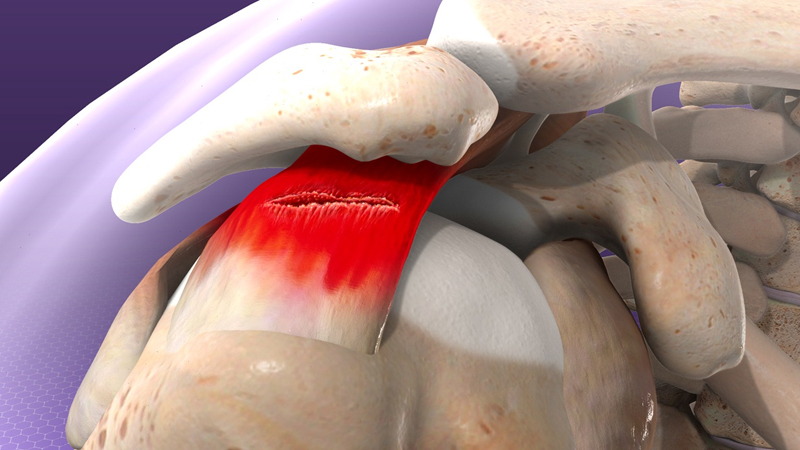
A rotator cuff tear is a common cause of shoulder pain and weakness, involving one or more of the four tendons that form the rotator cuff — supraspinatus, infraspinatus, teres minor, and subscapularis. These tendons attach the rotator cuff muscles to the humerus (upper arm bone) and are essential for shoulder stability and movement. Tears can be partial (involving part of the tendon thickness) or full-thickness (a complete tear through the tendon).
Causes
Acute tears occur as a result of a sudden injury such as a fall onto an outstretched arm, a forceful overhead movement, or a shoulder dislocation. They are more common in younger patients and often require prompt assessment.
Degenerative tears develop gradually over time due to repetitive overuse, age-related changes in tendon tissue, reduced blood supply to the tendons, and bone spurs that may irritate or abrade the tendon surface. They are most common in people over 40 and may be present without a specific injury.
Symptoms
- Pain at the top or outer side of the shoulder, often worsening at night or when lying on the affected side
- Weakness when lifting, rotating, or raising the arm
- Difficulty with overhead activities or reaching behind the back
- A catching or grinding sensation in the shoulder
- Reduced range of shoulder movement
- Atrophy (muscle wasting) in chronic or large tears
Diagnosis
Clinical examination assesses shoulder strength, range of motion, and identifies patterns consistent with rotator cuff pathology. An MRI scan is the investigation of choice to confirm the diagnosis, characterise the tear (size, location, tendon involvement), and assess muscle quality — all of which influence treatment planning. Ultrasound may also be used as an initial investigation.
Grading Rotator Cuff Tears
- Partial thickness tear: Involves part of the tendon but does not extend fully through it
- Full thickness (complete) tear: Extends through the entire thickness of the tendon, with or without retraction
- Massive tear: Involves two or more tendons and is associated with greater functional impairment
Treatment Options
Non-Surgical Management
Many rotator cuff tears — particularly partial tears and degenerative full-thickness tears in less active patients — can be managed successfully without surgery. Treatment includes physiotherapy to strengthen the surrounding muscles, activity modification, analgesic and anti-inflammatory medication, and subacromial injections where appropriate.
Surgical Management
Surgical repair is considered when symptoms persist despite an adequate trial of non-surgical treatment, when there is a significant full-thickness tear, or when the patient has high functional demands. Arthroscopic rotator cuff repair reattaches the torn tendon to its footprint on the humeral head using suture anchors.
Why Choose Dr. Raja Nadar for Rotator Cuff Tear?
Dr. Raja Nadar has fellowship training in Shoulder and Knee Arthroscopy with specific experience in rotator cuff pathology, including academic work and presentations on arthroscopic management of rotator cuff injuries. He provides thorough assessment and evidence-based management for patients at all stages of rotator cuff disease.