

Fractures
A fracture is a break in the continuity of a bone, ranging from a hairline crack to a complete break into multiple fragments. Fractures can occur as a result of trauma, repetitive stress, or as a consequence of underlying bone disease that weakens the bone (pathological fracture). Effective management aims to restore bone alignment, achieve stable healing, and return the patient to full function as safely and efficiently as possible.
Types of Fractures
- Simple (closed) fracture: The bone is broken but the skin remains intact
- Open (compound) fracture: The bone breaks through the skin, creating a risk of infection and requiring urgent management
- Comminuted fracture: The bone is shattered into three or more fragments, often from high-energy trauma
- Stress fracture: A small crack from repetitive loading, common in athletes and active individuals
- Avulsion fracture: A fragment of bone is pulled away by an attached tendon or ligament
- Periarticular fracture: A fracture involving or adjacent to a joint, requiring careful management to restore joint function
- Periprosthetic fracture: A fracture occurring around an existing joint replacement implant
Common Fracture Locations
Fractures can occur in any bone. Those commonly encountered in orthopaedic practice include:
- Ankle fractures (medial, lateral, or posterior malleolus)
- Tibial plateau fractures (around the knee joint)
- Distal femur fractures (above the knee)
- Tibial shaft fractures
- Wrist fractures (distal radius)
- Hip fractures (in older patients)
- Foot and toe fractures
Symptoms of a Fracture
- Sudden, severe pain at the site of injury
- Swelling, bruising, and tenderness
- Deformity or abnormal position of the limb
- Inability or significant difficulty bearing weight or using the affected limb
- In open fractures: a visible wound or protruding bone
Diagnosis
X-rays are the primary imaging investigation to identify and characterise a fracture. CT scanning provides detailed three-dimensional information for complex or periarticular fractures and is essential for surgical planning. MRI may be used to identify stress fractures or assess associated soft tissue injuries.
Treatment Options
Non-Surgical Management
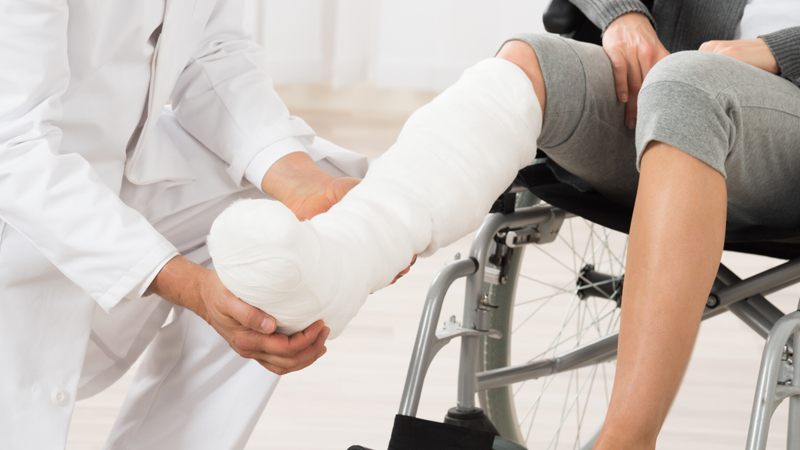
Stable, undisplaced, or minimally displaced fractures in appropriate locations may be treated in a plaster cast or functional brace, allowing bone healing with gradual return to weight-bearing.
Surgical Management
Surgical fixation is required when fractures are displaced, unstable, involve a joint surface, or are in locations that require early mobilisation. Techniques include:
- Plate and screw fixation
- Intramedullary nailing for long bone fractures
- External fixation — used as a temporary or definitive measure
- Percutaneous screw fixation for certain fractures
Why Choose Dr. Raja Nadar for Fractures?
Dr. Raja Nadar has broad orthopaedic training encompassing fracture management alongside his subspecialty experience in foot and ankle surgery, arthroscopy, and joint replacement. He provides meticulous pre-operative planning and committed post-operative care to achieve the best possible functional outcomes for patients with fractures.