

Arthroscopic Cuff Repair
Arthroscopic Rotator Cuff Repair is a minimally invasive surgical procedure used to treat tears of the rotator cuff — the group of muscles and tendons surrounding the shoulder joint. The procedure aims to reattach the torn tendon to the bone, restore shoulder strength, and help patients regain function in their daily activities and, where appropriate, return to sport.
What Is a Rotator Cuff Injury?
The rotator cuff consists of four muscles and their tendons that attach to the bones of the shoulder. Together, they stabilise the shoulder joint and enable a wide range of arm movements. A rotator cuff tear can occur as a result of a sudden injury or can develop gradually due to repetitive overhead activity or natural wear over time.
Common symptoms of a rotator cuff tear include:
- Pain at the top or outer side of the shoulder, often worsening at night
- Weakness when lifting or rotating the arm
- Difficulty with overhead activities
- A catching or grinding sensation in the shoulder
- Reduced range of shoulder movement
When Is Rotator Cuff Repair Recommended?
Not all rotator cuff tears require surgery. Treatment is tailored to the individual based on the size and nature of the tear, symptom severity, activity requirements, and response to non-surgical management.
Surgical repair may be considered when:
- Symptoms persist despite an adequate trial of non-surgical treatment
- The tear is significant or involves a complete rupture of the tendon
- There is progressive weakness or functional limitation
- The patient has high physical demands or activity goals
How Is Arthroscopic Cuff Repair Performed?
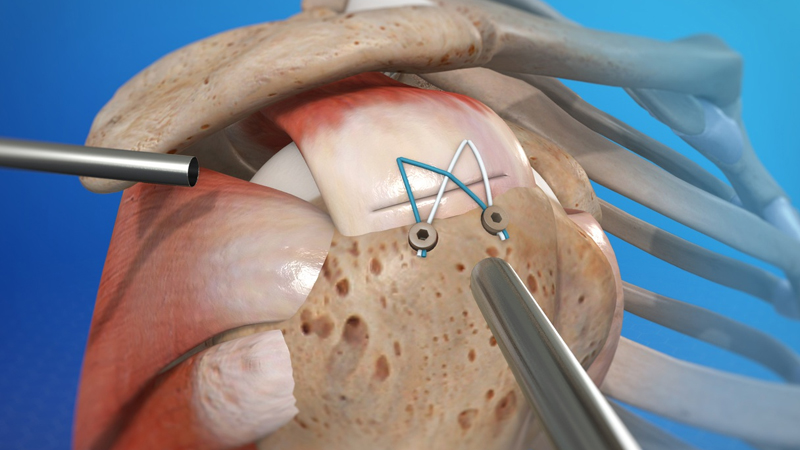
The procedure is performed using arthroscopy, where a small camera and specialised instruments are introduced through small incisions around the shoulder. This allows the surgeon to inspect the entire shoulder joint and the rotator cuff tendons under magnified, high-definition vision.
During the procedure:
- The shoulder joint and subacromial space are examined arthroscopically.
- The torn tendon edges are assessed and prepared for repair.
- Small anchors are inserted into the bone to secure the tendon back to its footprint on the humeral head.
- Strong sutures are passed through the tendon and tied to restore the normal anatomical attachment.
- Associated problems within the shoulder, such as bursal thickening or acromial bone spurs, may be addressed during the same procedure.
Benefits of Arthroscopic Cuff Repair
- Smaller incisions compared to open surgery
- Detailed visualisation of the shoulder joint and surrounding structures
- Ability to address associated conditions during the same procedure
- Restoration of tendon attachment and shoulder function
- Support for a structured rehabilitation and return-to-activity programme
Recovery After Arthroscopic Cuff Repair
Recovery following rotator cuff repair requires patience, as tendon healing takes time. Rehabilitation is a critical part of the process and typically proceeds in stages.
Early Protection Phase
The arm is usually supported in a sling for several weeks to protect the repair while initial healing takes place. Gentle passive movement exercises may begin early under guidance.
Range of Motion Phase
Progressive exercises to restore shoulder movement are introduced as healing allows.
Strengthening Phase
Gradual strengthening of the rotator cuff and surrounding shoulder muscles is incorporated as the tendon heals.
Functional Return Phase
Activity-specific exercises and progressive loading are introduced before return to full function or sport.
Full recovery can take several months, and the timeline varies based on the size of the tear, quality of the repair, and the patient's rehabilitation effort.
Why Choose Dr. Raja Nadar for Rotator Cuff Repair?
Dr. Raja Nadar has specialised training in shoulder arthroscopy, including fellowship experience in Shoulder and Knee Arthroscopy under Dr. Abhay Narvekar at P.D. Hinduja and Global Hospitals, Mumbai. His academic and clinical work includes research and presentations related to arthroscopic management of rotator cuff injuries, reflecting his focused involvement in this area of orthopaedic care.