

Meniscus Tear
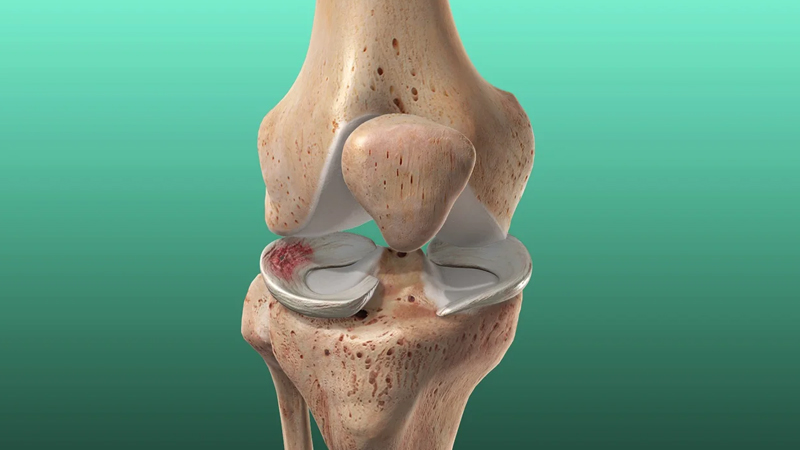
A meniscus tear is one of the most common injuries of the knee, affecting the C-shaped cartilage discs that sit between the thigh bone (femur) and shin bone (tibia). Each knee has two menisci — the medial (inner) and lateral (outer) — which serve as shock absorbers, distribute load across the joint, and contribute to knee stability. Tears can range from minor to complex and can occur at any age.
Causes of a Meniscus Tear
Traumatic tears typically occur in younger, active individuals and are often caused by a twisting or pivoting movement of the knee, particularly during sport. They may occur in isolation or alongside other injuries such as an ACL tear.
Degenerative tears are more common in older individuals and occur as the meniscus weakens and becomes less resilient with age. A degenerative tear may occur with minimal trauma — even from a simple squatting or twisting movement.
Symptoms of a Meniscus Tear
- Pain along the inner or outer joint line of the knee
- Swelling and stiffness of the knee
- A clicking, catching, or locking sensation within the joint
- Difficulty fully bending or straightening the knee
- A feeling of giving way or instability
- Pain worsening with squatting, kneeling, or twisting
A locked knee — where the joint becomes stuck and cannot be fully extended — may indicate a displaced bucket-handle tear and typically requires prompt surgical assessment.
Diagnosis
Diagnosis is made through clinical examination and confirmed with an MRI scan, which provides detailed information about the type, location, size, and pattern of the tear. This guides treatment planning.
Treatment Options
Non-Surgical Management
Minor, stable tears — particularly degenerative tears in older patients without mechanical symptoms — may be managed with rest, physiotherapy, pain relief, and activity modification. Many such tears settle with conservative care.
Surgical Management
Surgery is considered when symptoms persist despite non-surgical treatment, or when there are mechanical symptoms such as locking. Arthroscopic surgery allows direct visualisation and treatment of the tear. Options include:
- Meniscus repair — reattaching the torn edges to allow healing. Preferred in suitable tears to preserve meniscal tissue and long-term knee health.
- Partial meniscectomy — trimming the torn portion of the meniscus when repair is not possible due to the tear pattern or tissue quality.
Why Choose Dr. Raja Nadar for Meniscus Tear?
Dr. Raja Nadar has specialised training in knee arthroscopy and experience managing a range of meniscal pathology. His approach prioritises preservation of the meniscus wherever possible to protect long-term joint health.