


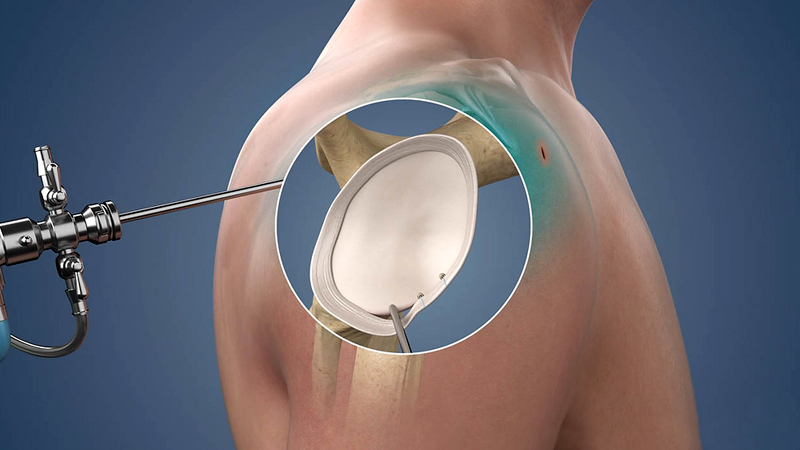
Arthroscopic Bankart Repair
Arthroscopic Bankart Repair is a minimally invasive surgical procedure used to treat recurrent shoulder instability caused by a Bankart lesion — a tear of the labrum (the soft tissue ring attached to the rim of the shoulder socket) that typically occurs following a shoulder dislocation. The procedure aims to reattach the torn labrum and restore stability to the shoulder joint.
What Is Shoulder Instability?
The shoulder is the most mobile joint in the body, which also makes it susceptible to instability. A Bankart lesion commonly results from a traumatic anterior dislocation and involves detachment of the anterior-inferior labrum from the glenoid (socket). Without repair, this can lead to recurrent episodes of shoulder dislocation or a persistent feeling of the shoulder slipping.
Common symptoms include:
- Recurrent shoulder dislocations or subluxations
- A feeling of the shoulder slipping or giving way
- Apprehension during overhead or throwing activities
- Pain and discomfort at the front of the shoulder
- Reduced confidence in shoulder function during sport or daily activities
When Is Bankart Repair Recommended?
Surgical repair may be considered for patients with:
- Recurrent anterior shoulder dislocations
- Significant functional instability affecting daily life or sport
- A confirmed Bankart lesion on MRI or arthroscopic assessment
- Persistent instability following appropriate non-surgical management
- Young, active patients with high physical demands
How Is Arthroscopic Bankart Repair Performed?
The procedure is carried out using arthroscopy, where a small camera is introduced into the shoulder joint through small incisions, providing a clear and magnified view of the internal structures.
During the procedure:
- The shoulder joint is examined arthroscopically to identify the extent of labral damage.
- The detached labrum and capsule are mobilised and prepared for reattachment.
- Small bone anchors loaded with sutures are inserted into the glenoid rim.
- The sutures are passed through the labrum and tied to reattach it securely to the bone.
- The anterior capsule is also tensioned as part of the repair to restore joint stability.
- Any associated shoulder pathology identified at arthroscopy may be addressed at the same time.
Benefits of Arthroscopic Bankart Repair
- Minimally invasive with small incisions and reduced soft tissue disruption
- Comprehensive visualisation of the shoulder joint
- Restoration of labral anatomy and shoulder stability
- Allows simultaneous treatment of associated shoulder injuries
- Supports a structured return to sport and physical activity
Recovery After Bankart Repair
Recovery requires careful protection of the repair during the healing phase, followed by progressive rehabilitation.
Immobilisation Phase
The arm is typically supported in a sling for several weeks to allow initial healing of the repaired labrum.
Range of Motion Phase
Guided exercises to gently restore shoulder movement are introduced progressively.
Strengthening Phase
Rotator cuff and periscapular muscle strengthening is incorporated to support joint stability.
Return to Sport Phase
Sport-specific training and functional assessment before return to competitive activities, guided by clinical progress.
Return to contact or throwing sports typically takes several months. Full recovery depends on diligent rehabilitation and progressive loading.
Why Choose Dr. Raja Nadar for Bankart Repair?
Dr. Raja Nadar has specialised fellowship training in Shoulder and Knee Arthroscopy under Dr. Abhay Narvekar at P.D. Hinduja and Global Hospitals, Mumbai. His experience in shoulder arthroscopy includes management of instability and labral conditions, supported by academic work and presentations in arthroscopic orthopaedic care.