

What Is ACL Surgery?
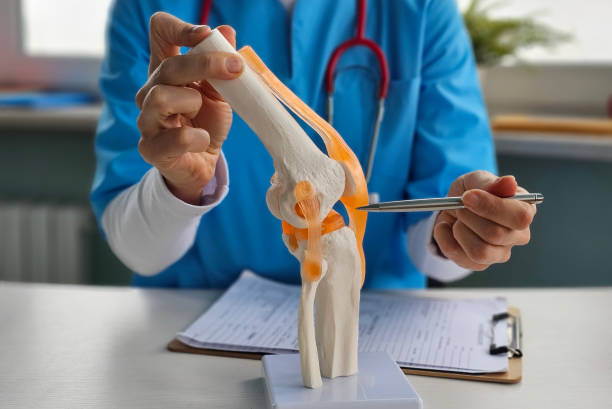
Make an appointment with the ACL Reconstruction Surgeon in Chembur Dr. Raja Nadar right now.Doctors can replace a torn ligament in your knee with ACL surgery. The band of tissue inside your knee is called the anterior cruciate ligament, or ACL. When it tears or expands, it gets ruined. Athletes frequently sustain ACL injuries because they engage in activities that might place a lot of strain on the knee, such as:
- Rapid direction change (cutting)
- Abruptly stopping
- Putting your foot down and turning
- Making a bad landing following a jump
Your knee's bones are held together when your ACL is in good condition. Additionally, it keeps your knee stable. You can find it difficult to walk, play sports, or apply pressure to your knee if it is damaged.
ACL Surgery Procedure
For your ACL, doctors usually do arthroscopic surgery. In other words, doctors make tiny incisions around your knee to introduce a camera and tiny equipment. Compared to open knee surgery, this technique leaves fewer skin scars. It takes roughly one hour to complete. Regional anesthesia involves your doctor injecting medication into your back so you won't feel anything in your legs for a few hours, while general anesthesia puts you to sleep for the procedure. You may also receive medication to help you relax throughout the treatment if you have regional anesthesia. The graft must be positioned correctly as the initial step. After that, your physician will drill two "tunnels." One will be inserted into the bone above your knee and another into the bone beneath it. To secure the graft, screws will be inserted into the tunnels. As you heal, it acts as a kind of bridge on which a new ligament will grow. A new ACL may take several months to fully heal. Most patients are able to return home the same day after surgery. To safeguard the joint, your doctor will advise you to wear a brace, rest your knee, and remain off your leg. Physicians are also doing research to determine whether a novel form of ACL surgery is superior to the current treatment. Bridge-enhanced ACL repair is the term for it (BEAR).In contrast to conventional ACL surgery, BEAR aids in the ACL's natural healing, eliminating the need for replacement. Between the torn ends of your ACL, doctors place a small sponge in your knee. The loose, torn ends of the ACL are then sutured into the sponge after your own blood is injected into it. It turns into an ACL support. The ripped ends eventually mend and regenerate into new, healthy ACL tissue.Treatment from the ACL Reconstruction Surgeon in Chembur will enhance your quality of life.
ACL Surgery Risks
Are you trying to find an ACL Reconstruction Surgeon in Chembur? Go see Dr. Raja Nadar right now.ACL surgery carries some dangers, just like any other kind of surgery. Generally speaking, surgery may result in:
- bleeding from the injury
- An infection
- Startled
- clots of blood
- Breathing problems
- Having trouble urinating
- Anesthesia-related reaction
The hazards associated with ACL surgery specifically include:
- Pain in the knees
- Stiffness in your knee
- A poorly healing graft
- A graft failing once you start exercising again
ACL Surgery Recovery
You will learn how to change the dressing on your wound before you leave the hospital. Your medical staff may advise you to keep your knee elevated on pillows, apply ice, and compress it with a bandage. To relieve the strain on your knee, you will most likely need to use crutches.We have an ACL Reconstruction Surgeon in Chembur, so please contact us.
Your doctor might prescribe the following pain medications:
- Over-the-counter medications like naproxen, ibuprofen, or acetaminophen
- Prescription drugs like gabapentin (Neurontin) or meloxicam (Mobic, Vivlodex)
As your ACL begins to heal, your doctor should prescribe gradual physical therapy. This will strengthen the muscles and ligaments. Then you can return to your favorite activities in about nine months' time. Athletes could be out of action for up to 12 months.